
 GB · EN


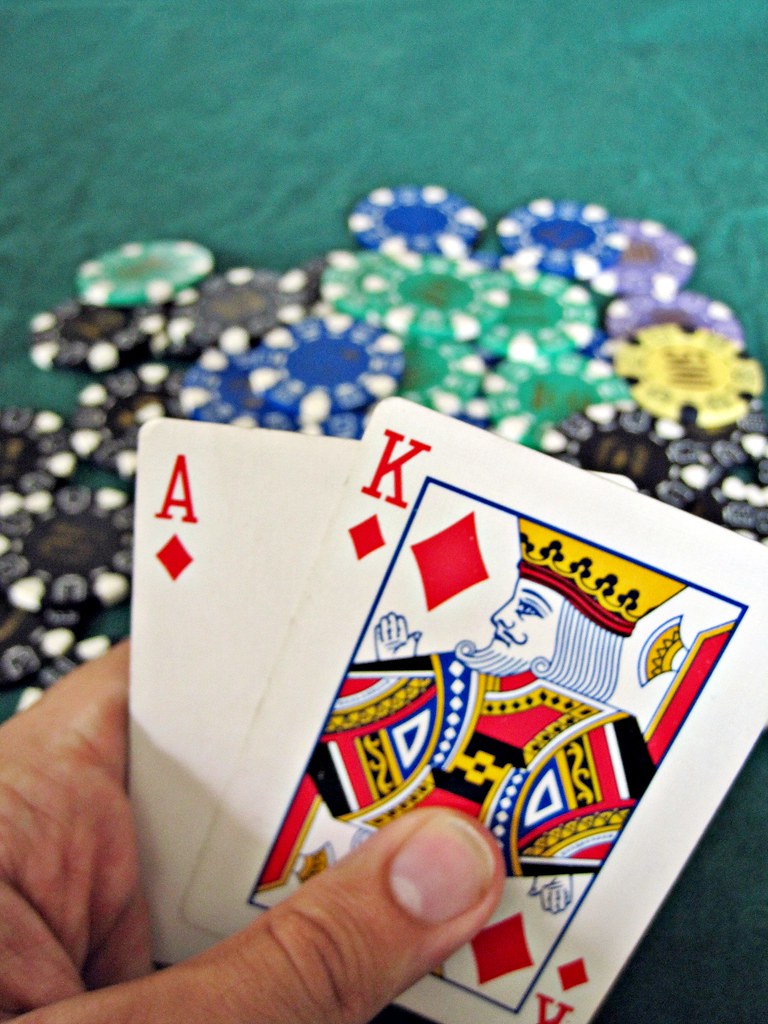
Blackjack is a card game where the player's hand is compared with the dealer's hand. The goal is to finish closer to 21 than the dealer without going over 21.
The basic actions are easy to learn, but individual table rules can materially change the mathematical profile of the game.
Card values
Cards are normally valued as follows:
- 2–10: face value
- jack, queen and king: 10
- ace: 1 or 11
The ace uses the value that keeps the hand legal and most useful.
Soft and hard hands
A soft hand contains an ace that can still count as 11 without busting.
A hard hand either contains no ace or has an ace that must count as 1.
The distinction matters because the same total can call for different decisions depending on whether it is soft or hard.
What is a natural blackjack?
A natural blackjack normally consists of:
- one ace
- one ten-value card
- exactly two starting cards
A total of 21 made with three or more cards is normally not treated as a natural blackjack.
Blackjack payout
The payout for a natural blackjack is one of the most important table rules.
Do not assume every game uses the same payout just because it is called blackjack.
Hit
Hit means asking for another card.
A player can normally continue hitting until choosing another action or going over 21.
If the total exceeds 21, the hand busts and normally loses immediately.
Stand
Stand means taking no more cards.
The dealer then completes the dealer hand according to fixed table rules.
Double down
Double normally means increasing the original stake and receiving exactly one more card.
Check:
- which starting totals can double
- whether double after split is allowed
- whether the extra stake must equal the original bet
Split
If the first two cards form an eligible pair, the hand can sometimes be split into two separate hands.
A second stake is normally required.
Re-splitting
Tables can differ on:
- how many times a hand can be split
- whether aces can be re-split
- whether double after split is allowed
Split aces
Split aces often have special rules.
A table may allow only one further card on each ace and may not count a resulting 21 as a natural blackjack.
Dealer rules
The dealer does not choose freely. The dealer follows fixed instructions.
A key rule is what happens on soft 17.
Soft 17: hit or stand
Tables can state:
- dealer stands on soft 17
- dealer hits soft 17
This rule affects the game's long-term mathematics and should be visible in the information panel.
Push
A push occurs when player and dealer finish with the same qualifying total.
The main stake is normally returned rather than won or lost, subject to table rules.
Insurance
Insurance can be offered when the dealer shows an ace.
It is a separate wager on whether the dealer has blackjack and should be evaluated separately from the main hand.
Even money
Some tables may offer even money when the player has blackjack and the dealer shows an ace.
This is closely related to insurance and should be understood through the table's exact payout rules.
Surrender
Some blackjack games allow surrender.
The player gives up the hand under defined conditions and receives part of the original stake back.
Check whether the table offers early or late surrender and when the option is available.
Number of decks
Blackjack can use:
- one deck
- two decks
- six decks
- eight decks
- other configurations
Deck count is only one factor. It should be considered together with payout, soft-17, split and double rules.
Dealer hole-card procedure
Some variants give the dealer a hole card early, while others use a different dealing procedure.
This can affect how certain double and split situations are settled if the dealer later has blackjack.
Side bets
Optional blackjack side bets are separate products with their own:
- payouts
- probabilities
- limits
Do not assume they share the mathematics of the main blackjack wager.
Table limits
The lobby minimum normally refers to the opening hand.
The total amount committed in a round can increase through:
- double
- split
- re-split
- side bets
Live blackjack
Live blackjack uses a streamed dealer and physical cards or approved dealing equipment.
Compare:
- rule set
- table limits
- betting window
- stream quality
- side bets
Read our live dealer casino guide.
Digital blackjack
Digital blackjack uses software to generate and process the round.
The visual layout may resemble live blackjack, but the technical outcome source is different.
Basic strategy
Blackjack is unusual among casino games because player decisions can affect the long-term mathematical return.
A basic strategy depends on:
- player hand
- dealer up-card
- specific table rules
It cannot guarantee a winning session.
House edge
The house edge in blackjack depends strongly on rules and decisions.
Important factors include:
- blackjack payout
- soft-17 rule
- deck count
- double rules
- split rules
- surrender
Read our house edge guide.
Bonus terms and blackjack
Casino bonuses can treat blackjack differently from slots.
Check:
- wagering contribution
- excluded tables
- maximum bet
- side-bet restrictions
Common misunderstandings
The goal is always to make 21
No. The goal is to beat the dealer without busting.
Every 21 is a blackjack
No. A natural blackjack normally requires exactly two starting cards.
The dealer makes strategic choices
No. The dealer follows fixed rules.
Every blackjack table is mathematically identical
No. Payouts and table rules vary.
Blackjack checklist
Before playing, check:
- blackjack payout
- soft-17 rule
- number of decks
- double rules
- split and re-split rules
- split-ace rules
- surrender
- insurance
- side bets
- table limits
- bonus compatibility
Conclusion
Blackjack is built around hit, stand, double and split, but the table's rule set determines how the game actually behaves.
Compare payout, soft 17, deck count, split, double and surrender rules instead of assuming every blackjack table is the same.
Read also
We check licensing, terms, payments, and available player-protection tools. Commercial relationships do not change our evidence standards.



Comments
Keep comments constructive. Every comment is reviewed before publication.